
Connector manufacturer
Connector manufacturer
Key Differences Between Low Pressure and High Pressure Automotive Connectors
In the intricate anatomy of a modern automobile, where the shift from purely mechanical to electro-mechanical and now to fully electronic systems is accelerating, connectors are the unsung heroes. They are the critical synapses in the vehicle’s nervous system, ensuring the reliable transmission of signals, data, and power. Among these, the distinction between low-pressure and high-pressure connectors is fundamental, governing everything from infotainment systems to fuel delivery and brake safety. Choosing the wrong type is not merely an engineering oversight; it can lead to system failure, safety hazards, and costly recalls. This article delves into the technical chasm separating low-pressure and high-pressure automotive connectors, examining their design, materials, applications, and testing standards.
Defining the Pressure Regimes: More Than Just a Number
The primary differentiator is, unsurprisingly, the operating pressure range. However, this simple metric cascades into a vast array of design consequences.
-
Low-Pressure Connectors: These are designed for environments with little to no fluid pressure. Their domain is the transmission of electrical signals, data, and low to moderate electrical power. The “pressure” they contend with is primarily environmental—sealing against dust, moisture, and incidental splash—not internal system pressure. Typical operating ranges are from vacuum (e.g., -14.5 PSI) up to approximately 150 PSI (10 bar). Their sealing function is primarily exclusionary (keeping contaminants out).
-
High-Pressure Connectors: Engineered to withstand significant internal fluid pressure, these are the workhorses of automotive fluid and fuel systems. They must maintain a perfect seal while being subjected to constant pressure, extreme pressure spikes (e.g., fuel injection pulses), and aggressive media. Their operating range typically starts around 150 PSI and can extend to 3,000 PSI (207 bar) and beyond for applications like common rail diesel injection or hydraulic brake lines. Here, sealing is both exclusionary and containment-based (keeping high-pressure fluid in).
Core Design and Architectural Differences
The pressure mandate drives radically different design philosophies.
1. Primary Sealing Mechanism:
-
Low-Pressure: Relies on elastomeric seals (e.g., silicone, EPDM, neoprene) placed in grooves on the connector housing or header. These seals compress during mating, creating a gasket-like barrier against the environment. The focus is on the seal’s resilience to temperature cycling, ozone, and moisture.
-
High-Pressure: Employs a multi-stage sealing system. The first line is often a metal-to-metal seal (e.g., a conical seat or a spherical/ball seal). This is a robust, permanent seal that can withstand the highest pressures and temperatures. It is frequently supplemented by a secondary elastomeric O-ring for redundancy and environmental sealing. The connection itself is a mechanical coupling (e.g., a screw thread, a bite-type ferrule, or a quick-connect with positive latches) designed to withstand vibration and pressure-induced separation forces.
2. Connector Body and Contacts:
-
Low-Pressure: Housings are typically made from engineering plastics (PBT, PA, PPS) chosen for dimensional stability, chemical resistance, and cost. Electrical contacts are stamped and formed, often with simple retention features like cantilever beams. The mating/unmating force is relatively low.
-
High-Pressure: The primary structure is metallic—brass, stainless steel, or aluminum—to provide the mechanical strength needed to contain pressure and handle torque during installation. Plastic may be overmolded for insulation and handling, but the pressure-bearing skeleton is metal. Electrical contacts must be meticulously insulated from the metal body using high-grade dielectric materials like PEEK or PTFE, which can withstand high temperatures and aggressive fuels.
3. Keying and Coupling:
-
Low-Pressure: Uses plastic keying ribs, polarizing features, and low-force latching systems (e.g., CPA – Connector Position Assurance clips) to prevent accidental unmating.
-
High-Pressure: Features high-integrity mechanical coupling. This includes threaded nuts (DIN/ISO metric threads are common), bayonet-style locks, or quick-connect designs with audible “click” confirmation and positive lock/release sleeves. The coupling must resist vibration loosening, a phenomenon addressed by design (e.g., prevailing torque threads) and not just hope.
Material Science: Tailored for the Environment
The operating fluid dictates material compatibility, a factor far more critical in high-pressure systems.
-
Low-Pressure Seals & Housing: Standard hydrocarbon-resistant rubbers (NBR, EPDM) often suffice. Plastics are selected for general under-hood conditions (-40°C to +125°C continuous).
-
High-Pressure Seals & Components: Must resist aggressive media:
-
Fuel (Gasoline, Diesel, Biofuels): Requires fluoroelastomers (FKM/Viton®) or perfluoroelastomers (FFKM) for seals, as standard rubbers swell and degrade. Metals must resist sulfur-induced corrosion.
-
Brake Fluid (DOT 3/4/5.1): Highly hygroscopic and corrosive to many plastics and metals. Seals are typically EPDM or specialized compounds, and metals are often nickel-plated.
-
Refrigerant (R-1234yf): Demands barrier properties to prevent gas permeation. Nylon (PA) with special additives or polybutylene terephthalate (PBT) is common.
-
AdBlue/DEF (Urea Solution): Highly corrosive. Connectors use specialized stainless steels (e.g., 316L) and seals made from FKM or FFKM.
-
Applications: Where They Live in the Vehicle
This design divergence naturally partitions their domains within the vehicle.
Low-Pressure Connector Applications:
-
Body and Comfort: Wiring harnesses for lighting, power windows, seats, and infotainment.
-
Powertrain Control: Sensors (camshaft, crankshaft, oxygen), actuators, ECU connections.
-
Advanced Driver Assistance Systems (ADAS): Radar, LiDAR, camera modules.
-
In-Vehicle Networking: CAN, LIN, Ethernet, and FlexRay data buses.
High-Pressure Connector Applications:
-
Fuel System: From the tank to the high-pressure pump and into the fuel rail and injectors (the highest-pressure domain in many vehicles).
-
Braking System: ABS/ESC hydraulic control unit connections, brake line fittings.
-
Transmission: Clutch and transmission control hydraulic lines.
-
Air Conditioning: Compressor and line fittings for refrigerant.
-
Exhaust Aftertreatment: SCR systems for AdBlue/DEF dosing.
-
Hybrid/Electric Vehicles: Battery cooling loops and power electronics cooling.
Testing and Validation: Proving Grounds
The validation regimes underscore the severity of their operating conditions.
-
Low-Pressure Testing: Focuses on electrical and environmental integrity.
-
Electrical: Contact resistance, current cycling, voltage drop.
-
Environmental: Temperature cycling, humidity exposure, fluid immersion (for under-hood splash).
-
Mechanical: Vibration, connector insertion/withdrawal force, connector retention.
-
Sealing: IP (Ingress Protection) rating tests (e.g., IP6K9K for high-pressure water jets).
-
-
High-Pressure Testing: Adds intense fluid and pressure endurance.
-
Pressure Proof/Burst Test: Subjecting the connector to pressures far beyond its rating (e.g., 2-4x operating pressure) to ensure no rupture or permanent deformation.
-
Pressure Cycling/Pulse Test: Simulating years of engine-induced pressure pulsations (e.g., from fuel injection) to test for metal fatigue and seal integrity.
-
Extreme Temperature Cycling with Media: Cycling between -40°C and +150°C while pressurized with fuel or brake fluid.
-
Corrosion and Chemical Resistance: Long-term immersion in aggressive fluids.
-
Vibration with Pressure: Simultaneous application of high vibration and system pressure to test for fretting, loosening, or leak development.
-
The Convergence Point: Sealed Low-Voltage Connectors
The line can blur with the rise of low pressure and high pressure automotive connectors for Electric Vehicles (EVs). While these carry high electrical power, they are typically low-pressure devices. However, their cooling systems (for batteries, motors, and onboard chargers) do use high-pressure fluid connectors. An EV thus contains both extremes: sophisticated, sealed, high-current/low-pressure connectors for electricity and robust high-pressure connectors for thermal management.
Conclusion
The choice between low-pressure and high-pressure connector is not a matter of preference but of physics and chemistry. It is a fundamental engineering decision made at the system architecture level.
-
Low-pressure connectors are electrical components that happen to need environmental sealing. Their optimization is for signal integrity, data rate, packing density, and cost.
-
High-pressure connectors are fluid system components that happen to carry electrical signals or power. Their optimization is for containment integrity, material compatibility, mechanical robustness, and safety.
Misapplication—using a low-pressure seal in a high-pressure line—is a recipe for catastrophic failure. Conversely, specifying a costly, over-engineered high-pressure connector for a sensor link is an unnecessary expense and adds bulk and weight. As vehicles evolve towards greater electrification and autonomy, the demands on both categories will only intensify: low-pressure connectors will need to handle higher data speeds and power in harsher environments, while high-pressure connectors will face new media and even higher pressures for efficiency gains. Understanding their key differences is the first step in designing the reliable, safe, and efficient vehicles of tomorrow.
For more about key differences between low pressure and high pressure automotive connectors, you can pay a visit to Gvtong at https://www.gvtong.net/ for more info.
-
GR Series-4-core 16# circular signal connector
-
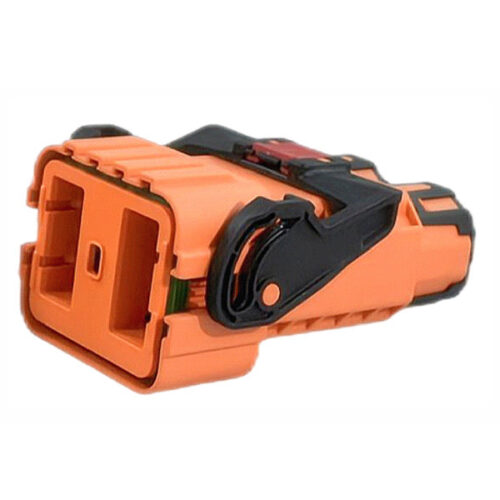
GH Series-HV6-2-core Plastic High Voltage Connector
-
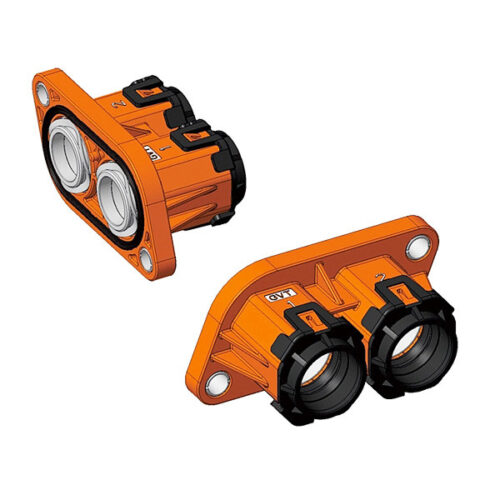
GVPT two-core wiring connector
-
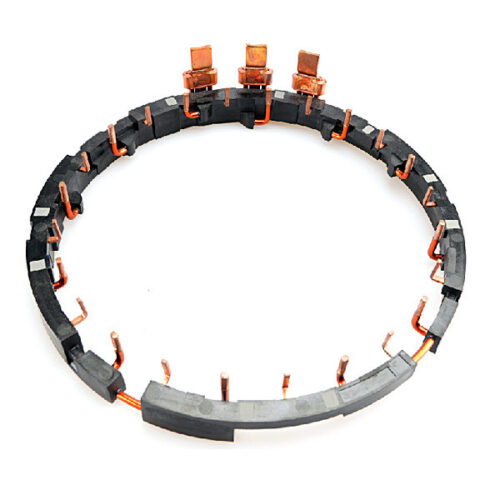
Bus bar
-
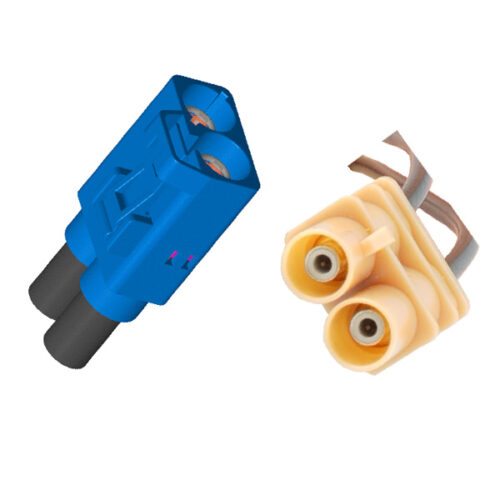
Automotive FAKRA Dual Connector For Wireless Antenna, GPS, Satellite Broadcasting, RF Bluetooth, IVI Information
-
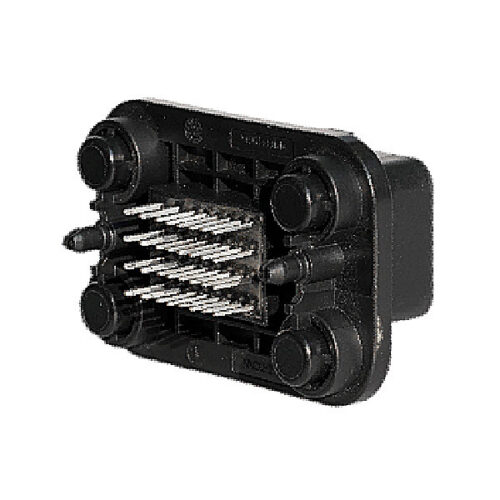
GE Series-32pin Signal Connector Right Angle Socket
-
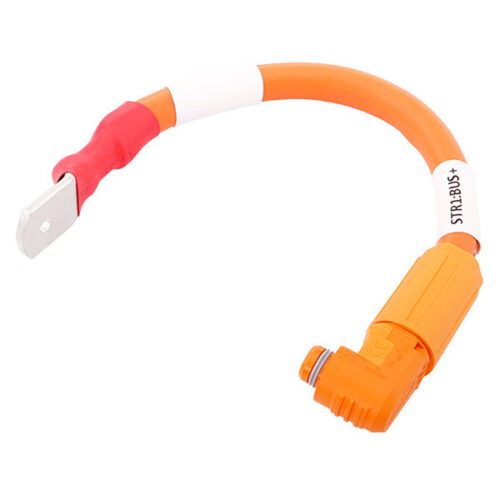
Energy storage wiring harness
-
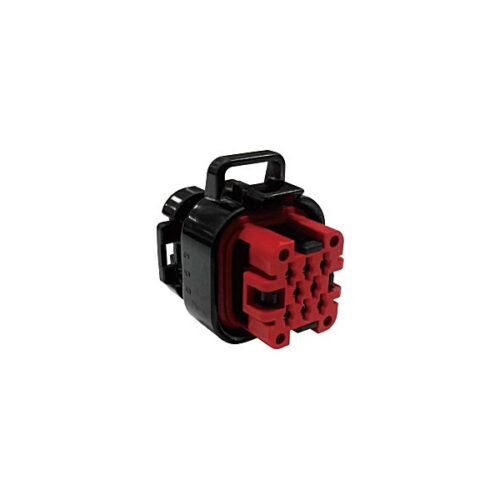
Signal connector – waterproof, three-row, 8-pin