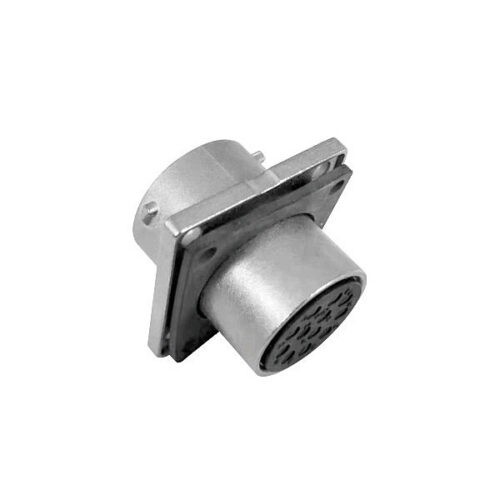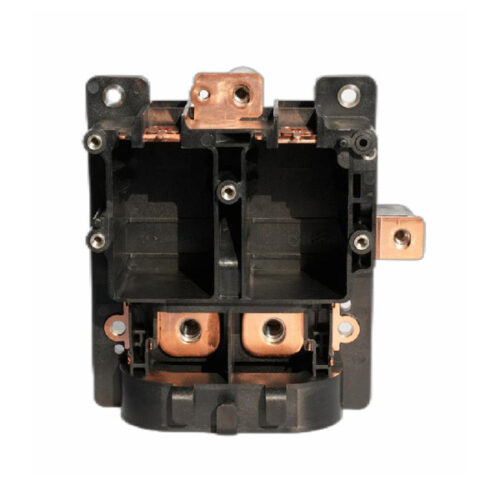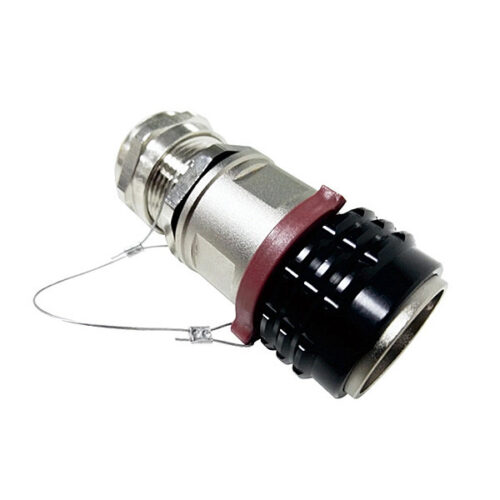
Connector manufacturer
Connector manufacturer
How Does an ADAS Automotive Connector Work? The Unsung Hero of Autonomous Driving
In the sleek, silent cockpit of a modern car, a symphony of advanced driver-assistance systems (ADAS) works tirelessly to keep you safe. A forward camera detects a slowing vehicle, triggering automatic emergency braking. Radar sensors monitor blind spots, while ultrasonic sensors guide you into a tight parking space. This seamless orchestration of perception, decision, and action feels like magic. Yet, beneath the body panels and behind the dashboards, this magic is enabled by a component so fundamental, so critical, that its failure would bring the entire system to a halt: the ADAS automotive connector.
More than just simple plugs and sockets, ADAS connectors are feats of micro-engineering, designed to be the utterly reliable nervous system of the vehicle. They are the vital interface where power meets data, where a sensor’s perception becomes the computer’s command. Understanding how they work reveals the astonishing complexity behind the simple act of “staying in lane.”
The Stakes: Why Ordinary Connectors Won’t Do
First, consider the mission. A standard radio connector can tolerate a bit of static. A dome light connector can survive a intermittent fault. An ADAS connector, however, is part of a safety-critical system. A single corrupted data packet from a front-facing radar, a momentary power dropout to a steering control unit, or electromagnetic interference scrambling a camera feed could have catastrophic consequences. Therefore, ADAS automotive connectors are not commodity parts; they are engineered to standards of performance, reliability, and durability that far exceed those for conventional automotive electronics.
Their core function is threefold:
- Deliver Uninterrupted Power: Provide stable, clean electrical power to sensitive sensors (cameras, LiDAR, radar) and processing units.
- Transmit High-Speed Data: Ferry massive, time-sensitive data streams from sensors to central computers and commands back to actuators (brakes, steering).
- Withstand the Automotive Abyss: Survive a brutal environment of vibration, temperature swings, moisture, chemicals, and electromagnetic noise for over 15 years.
Deconstructing the Working Principles
The operation of an ADAS connector can be broken down into several interrelated layers of engineering.
- The Hostile Environment: A Battle on All Fronts
A connector in an ADAS system doesn’t live a quiet life. It might be located behind the grille (baking in sun and sprayed with road salt), in the wheel well (pelted with debris and water), or on the roof module (enduring UV radiation and thermal cycling). Its design is a direct response to this:
- Vibration & Shock: Vehicles constantly vibrate. A poor connection that “chatters” (makes and breaks contact) is unacceptable. ADAS connectors use sophisticated contact designs (often dual-beam or tuning fork style) that maintain high normal force on the mating pins, ensuring gas-tight contact even under severe shaking. The connectors themselves are latched securely to the electronic control unit (ECU) or sensor housing.
- Thermal Cycling: From -40°C in an Alaskan winter to +125°C near the engine bay, materials expand and contract. ADAS connectors use housings made from high-performance, thermally stable plastics (like PBT or PPS) and contacts from copper alloys (like phosphor bronze) with selective gold or silver plating over nickel underplating. This combination ensures the contacts maintain their spring properties and corrosion resistance, and the housing doesn’t warp or become brittle.
- Sealing Against the Elements: This is where the humble seal becomes a hero. Most ADAS connectors are rated at IP6K9K (dust-tight and protected against high-pressure, high-temperature water jets). They employ multiple sealing barriers:
- A large interface seal between the connector halves.
- Individual wire seals (often made from silicone) for each terminal, which compress around the wire insulation to block moisture ingress along the cable.
- A header seal on the ECU side, where the connector mates to the circuit board.
This multi-layered defense creates a dry, safe chamber for the electrical contacts.
- The Electrical Heart: Power and Signal Contacts
Inside the sealed housing lies the core of the connection. ADAS connectors are almost always hybrids, containing different types of contacts within a single shell:
- Power Contacts: These are larger, heavier-gauge pins designed to carry the several amps of current required by a radar transmitter or a camera module. They minimize resistance to prevent voltage drop and heat generation.
- High-Speed Data Contacts: These are the precision-engineered marvels. To handle data rates from 100 Mbps (for simpler sensors) to multiple gigabits per second (for cameras and high-resolution radar), they must act as controlled impedance transmission lines. This means their geometry, spacing, and shielding are designed to preserve the integrity of high-frequency digital signals. They are often arranged as differential pairs (e.g., for Ethernet protocols like 100BASE-T1 or 1000BASE-T1, now standard in ADAS networks). Differential signaling sends inverted copies of the signal on two adjacent wires, making the system highly resistant to external electromagnetic interference (EMI).
- Shielding: The entire connector, or individual contact groups for high-speed data, is encapsulated in a metallic shield. This shield is electrically bonded to the cable shield and the ECU housing, creating a Faraday cage that traps EMI generated inside and blocks EMI from disrupting signals from the outside.
- The Data Highway: Protocols and Pinouts
The connector’s pin assignment is a carefully planned map. A single connector for a front-view camera might allocate:
- Pins 1 & 2: Permanent battery power (via a fused line).
- Pins 3 & 4: Ground.
- Pins 5 & 6: Wake-up/Sleep signal from the domain controller.
- Pins 7 & 10: A differential pair for Ethernet data transmission (TX+/-).
- Pins 8 & 9: A differential pair for Ethernet data reception (RX+/-).
This structured approach allows a single, compact connector to handle all the vehicle’s communication needs with the device.
- The Human Interface: Mating, Locking, and Serviceability
For all their complexity, connectors must be assembled on high-speed production lines and serviced by technicians.
- CPA (Connector Position Assurance): A small secondary clip or slider that “locks” the primary connector latch. You cannot engage the CPA until the connector is fully seated, providing a visual and tactile confirmation of a proper connection.
- TPA (Terminal Position Assurance): An internal component inserted into the connector housing after the wire terminals are installed. It locks each metal terminal into its correct cavity, preventing it from being pushed back out (a condition called “back-out”) due to vibration or during mating/de-mating.
- Color Coding and Keying: Housings are often color-coded, and they always have physical keys (unique ridges and grooves) that make it impossible to plug a camera connector into a radar socket, preventing catastrophic misassembly.
A Real-World Example: The Camera Module Connector
Let’s trace the journey through a typical ADAS connector on a windshield-mounted forward-facing camera:
- Power-Up: When the vehicle wakes up, the ADAS domain controller sends a low-current wake-up signal through dedicated pins in the connector. This signal travels over wires protected by their individual seals.
- Power Delivery: Upon wake-up, the camera’s power management circuit draws stable current through the large power pins. The gold plating on these contacts ensures minimal voltage loss and prevents fretting corrosion.
- Data Transmission: The camera’s CMOS sensor generates a raw video stream. An onboard serializer chip converts this to a high-speed differential serial stream. This stream is sent out on the dedicated Ethernet TX+/TX- contact pair within the connector. The precise geometry of these contacts and the surrounding shield maintain a consistent 100-ohm impedance, preventing signal reflections that would corrupt the image data.
- Environmental Defense: While this happens, the silicone wire seals grip the cable jacket, the interface seal compresses against the camera housing, and the entire assembly, locked by its CPA clip, withstands the vibrations of the road and the temperature swings from the sun on the windshield.
- Signal Integrity: As the digital signals pass through the connector, the metallic shield and the differential signaling reject EMI generated by the ignition system, power windows, or nearby cellular towers.
The Future: Evolving for Greater Demands
As we move towards Level 4 autonomy, the demands on connectors intensify. Data bandwidths are exploding with surround-view camera systems and solid-state LiDAR. This is driving the adoption of even faster protocols like 10 Gigabit Automotive Ethernet, requiring connectors with even more stringent impedance control and shielding.
Furthermore, the shift to Zone Architecture—where fewer, more powerful computers are located around the car—means connectors in doors and corners will need to aggregate data from multiple sensors, becoming small, ruggedized network hubs. The humble connector is evolving into an active, intelligent node in the vehicle’s network.

Conclusion
In the grand narrative of autonomous driving, the spotlight shines on artificial intelligence, machine learning, and sophisticated sensors. Yet, none of these technologies can function without the humble connector. It is the critical nexus, the unassuming gateway where the physical world of vibration and rain meets the digital world of data and decision-making.
An ADAS automotive connector works not through a single mechanism, but through a harmonious integration of mechanical robustness, electrical precision, and environmental defiance. It is a masterpiece of reliability engineering, ensuring that every millivolt of power and every gigabit of data arrives exactly as intended, every millisecond, for the life of the vehicle. In the journey towards self-driving cars, the connector is quite literally, the connection that makes it all possible. It is the unsung hero, quietly ensuring that the vehicle’s electronic nervous system remains intact, enabling the car to see, think, and act to protect its occupants.
For more about how does an ADAS automotive connector work, the unsung hero of autonomous driving, you can pay a visit to Gvtong at https://www.gvtong.net/ for more info.