
Connector manufacturer
Connector manufacturer
What is an Automotive Miniaturized Coaxial Connector and How to Choose It?
In the rapidly evolving world of automotive technology, connectivity plays a pivotal role in ensuring seamless operation of various systems within a vehicle. From advanced driver-assistance systems (ADAS) to infotainment and communication modules, the demand for reliable, high-speed data transmission has never been higher. At the heart of this connectivity lies the automotive miniaturized coaxial connector—a compact, specialized component designed to handle radio frequency (RF) signals efficiently in the harsh environments typical of vehicles. These connectors are essential for transmitting analog and digital signals with minimal loss, making them indispensable in modern automobiles.
Automotive miniaturized coaxial connectors, often referred to as mini-coax or miniaturized coax systems, represent a significant advancement over traditional coaxial connectors. They are engineered to be miniaturizeder, lighter, and more flexible, addressing the space and weight constraints imposed by contemporary vehicle designs. For instance, they can deliver up to 75% space reduction and 34% weight savings compared to standard connectors like FAKRA This miniaturization is crucial as vehicles incorporate more electronic components, such as cameras, sensors, and wireless modules, all requiring robust signal integrity.
The importance of these connectors stems from their ability to operate in frequencies ranging from DC to 9 GHz or even higher, up to 28 GHz in some advanced models They minimize RF signal losses, ensuring clear communication between devices Unlike general-purpose coaxial connectors used in consumer electronics, automotive variants are built to withstand extreme conditions, including vibrations, temperature fluctuations from -40°C to +125°C, and exposure to moisture and dust. This durability is governed by industry standards such as USCAR-49, which specifies performance for miniature automotive coaxial connectors As vehicles move toward electrification, autonomy, and connectivity—often dubbed the “connected car” era—the role of miniaturized coaxial connectors becomes even more critical.
They facilitate applications like 5G integration, vehicle-to-everything (V2X) communication, and high-definition video streaming for rear-seat entertainment. However, selecting the right connector involves balancing factors like frequency requirements, environmental resilience, and compatibility with existing systems. This article delves into what automotive miniaturized coaxial connectors are, their types, applications, and a comprehensive guide on how to choose the most suitable one for your needs.
Understanding Automotive Miniaturized coaxial Connectors
To grasp the essence of automotive miniaturized coaxial connectors, it’s helpful to start with the basics of coaxial technology. A coaxial connector consists of an inner conductor, an insulating layer, an outer conductor (shield), and an outer insulating jacket. This design allows for the transmission of high-frequency signals with low interference, as the outer shield protects against electromagnetic interference (EMI) In automotive contexts, these connectors are scaled down to “miniaturized” or “miniature” sizes to fit into tight spaces without compromising performance.
Mini coaxial cables and connectors are distinguished by their reduced diameter—often less than 3mm—making them more bendable and easier to route through vehicle harnesses For example, the High-Speed FAKRA-Mini (HFM) system from Molex is compact and lightweight, supporting data rates up to 28 Gbps while occupying 80% less space than traditional options These connectors are not just miniaturizeder; they are optimized for automotive use, covering high-frequency bands up to 9 GHz, which is vital for sophisticated advanced driving (AD) and ADAS systems Historically, coaxial connectors in vehicles evolved from larger RF connectors used in telecommunications.
The automotive industry adopted them in the 1990s for applications like GPS and cellular antennas. As demands grew for higher data speeds and more integrated electronics, standards bodies like SAE International developed specifications for miniaturized versions. The USCAR-49-1 standard, for instance, outlines testing procedures for coaxial cable connections operating from DC to 9 GHz, ensuring they meet vibration, thermal shock, and electrical integrity requirements What sets automotive miniaturized coaxial connectors apart from general RF connectors is their ruggedness.
They must comply with automotive-grade qualifications, such as ISO/TS 16949 for quality management. Materials like high-temperature plastics and corrosion-resistant metals are used to endure the vehicle’s lifecycle, which can span 15 years or 150,000 miles. Additionally, they incorporate features like color-coding for easy identification and keyed designs to prevent mismating, reducing assembly errors on production lines.
In terms of electrical characteristics, these connectors typically have a 50-ohm impedance, which is standard for RF applications to minimize signal reflection. They support both analog (e.g., radio signals) and digital (e.g., Ethernet-like data) transmissions. Advanced models include shielding to combat EMI from nearby power lines or motors, ensuring signal quality in noisy environments.
Types of Automotive Miniaturized coaxial Connectors
The automotive industry offers a variety of miniaturized coaxial connectors, each tailored to specific needs. Understanding these types is key to selecting the right one.
One prominent type is the FAKRA connector series. FAKRA (Fachkreis Automobil) connectors are standardized RF interfaces developed for automotive use, operating up to 6 GHz
amphenolrf.com
. They feature a color-coded plastic housing for quick identification—e.g., black for GPS, violet for satellite radio—and a keyed system with up to 13 variants to avoid incorrect connections FAKRA II is an enhanced version with improved mechanical stability.
Mini-FAKRA or High-Speed FAKRA-Mini (HFM) represents the miniaturized evolution, designed for higher frequencies up to 20 GHz and data rates of 28 Gbps. These are ideal for space-constrained applications, providing versatility in board-to-board or cable-to-board configurations Another key type is the HSD (High-Speed Data) connector, which focuses on digital data transmission rather than pure RF. HSD uses a four-core or shielded twisted-pair cable, supporting speeds up to 6 Gbps, making it suitable for LVDS (Low-Voltage Differential Signaling) in cameras and displays Unlike FAKRA, HSD emphasizes EMC shielding and is often used in infotainment systems.
Mini-Coax Automotive (MCA) connectors, such as Aptiv’s offerings, are even miniaturizeder and more flexible, addressing packaging challenges in modern vehicles. They reduce weight and improve bend radius, which is crucial for routing in tight engine compartments or door panels Other variants include Rosenberger’s RMC (Mini-Coax) series, which supports multi-channel configurations for ADAS and infotainment, operating up to 20 GHz with excellent EMI protection TE Connectivity’s MATE-AX is another example, engineered for 9 GHz performance with significant space savings Microminiature options like MMCX (Micro-Miniature Coaxial) are miniaturizeder versions of MCX, operating DC to 6 GHz, and are used where extreme compactness is needed
connectorsupplier.com
. These are less common in automotive but appear in specialized modules.
Each type adheres to standards like ISO 20860 for FAKRA and USCAR-17/18 for performance The choice depends on whether the application requires RF (FAKRA) or high-speed data (HSD), with mini versions preferred for new designs.
Applications in Vehicles
Automotive miniaturized coaxial connectors find widespread use across various vehicle subsystems, enhancing safety, comfort, and efficiency.
In ADAS, they connect cameras and sensors for features like surround view, lane assist, blind spot detection, and traffic sign recognition. For example, MATE-AX connectors enable reliable signal transmission in these systems, ensuring low-latency data for real-time decision-making Infotainment systems rely on them for high-definition video and audio streaming. HFM connectors support 28 Gbps data rates for rear-view cameras and gesture control interfaces They also facilitate night vision and driver monitoring by transmitting clear signals from infrared cameras.
Communication modules, including GPS, 5G, and V2X, use FAKRA connectors for antenna connections, minimizing signal loss for accurate navigation and vehicle-to-infrastructure links In electric vehicles (EVs), these connectors handle battery management signals and high-voltage monitoring, where EMI shielding is critical to prevent interference with power electronics.
Overall, their applications reduce signal degradation, enhance data movement, and maintain secure connections, making them essential for modern automotive electronics
article.fakraconnectors.com
.
How to Choose an Automotive Miniaturized coaxial Connector
Selecting the right automotive miniaturized coaxial connector requires careful consideration of several factors to ensure optimal performance and longevity.
First, evaluate the frequency and data rate requirements. For RF applications up to 6 GHz, FAKRA is suitable; for higher speeds like 28 Gbps, opt for HFM or HSD Impedance should match the system—typically 50 ohms—to avoid reflections.
Size and weight are crucial in space-limited vehicles. Miniaturized options like MCA or Mini-FAKRA offer up to 80% space savings, ideal for dense electronic modules Durability is non-negotiable. Choose connectors rated for automotive environments, with high-grade materials like PA66 plastics for heat and vibration resistance
customconnectorkits.com
. Look for IP67 or higher sealing against moisture.
Compatibility with standards ensures interchangeability. Verify compliance with ISO 20860, USCAR-17/18, or DIN 20860 electronics-sourcing.com
. Color-coding and keying in FAKRA prevent errors.
EMC shielding is vital; HSD excels here for digital signals Consider pin count, mating direction (straight or right-angle), and cable type—single-wire for FAKRA, twisted-pair for HSD.
Power handling and performance specs, like insertion loss and return loss, should align with the application. For example, in high-vibration areas, threaded connectors like TNC provide better stability than push-on types Finally, factor in cost, supplier reliability, and ease of installation. Consult manufacturers like Molex, TE Connectivity, or Rosenberger for custom solutions. Testing prototypes in real-world conditions can validate choices.
Conclusion
Automotive miniaturized coaxial connectors are the unsung heroes of vehicle connectivity, enabling the high-speed, reliable signal transmission needed for today’s smart cars. From FAKRA to HSD and mini variants, they offer diverse options for various applications. By understanding their types, uses, and selection criteria, engineers and designers can make informed decisions that enhance vehicle performance and safety. As automotive technology advances toward full autonomy, these connectors will continue to evolve, supporting even faster and more robust connections.
For more about what is an automotive miniaturized coaxial connector and how to choose it, you can pay a visit to Gvtong at https://www.gvtong.net/ for more info.
-
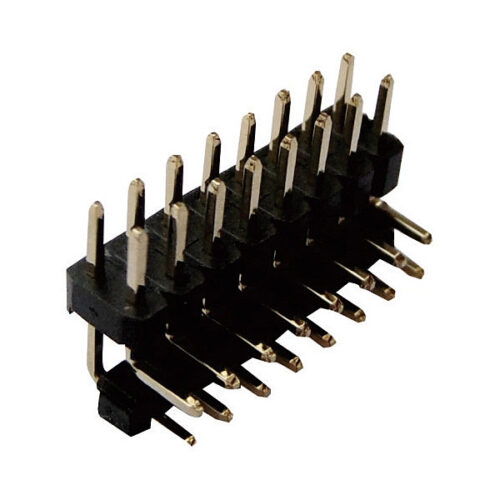
Pin header and female header
-
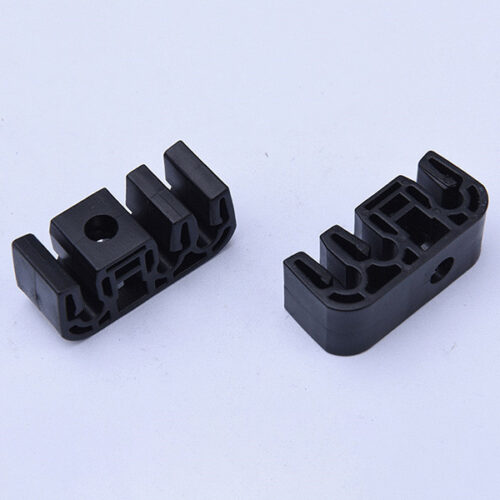
Automotive injection molded parts
-
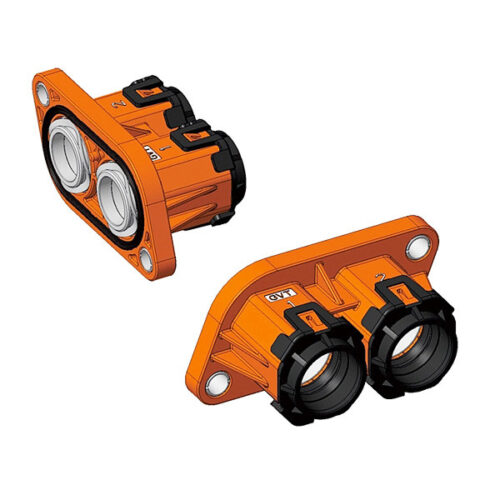
GVPT two-core wiring connector
-
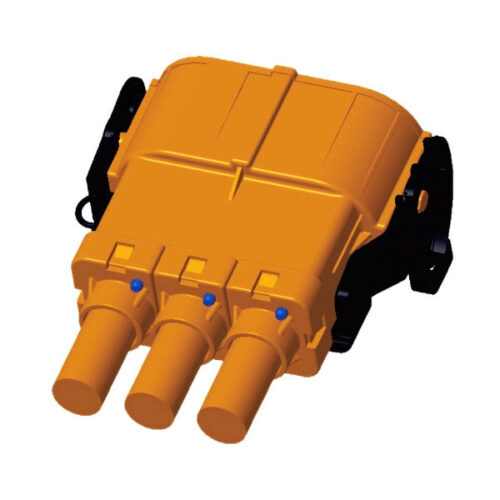
High voltage connector-GH800 series-3 core
-
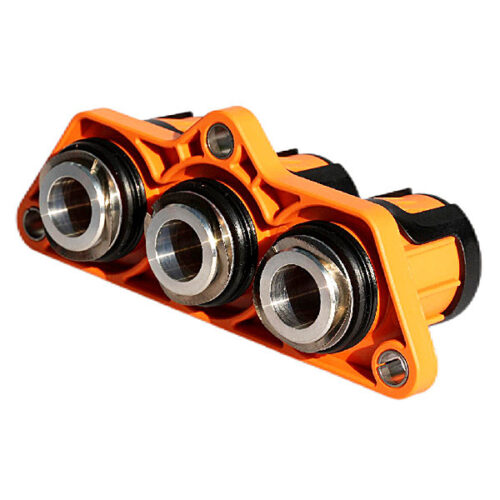
GIPT 3-core wiring connector
-
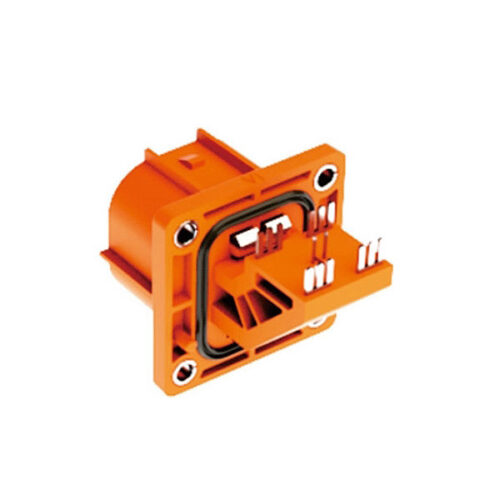
High voltage connector (4 cores)
-
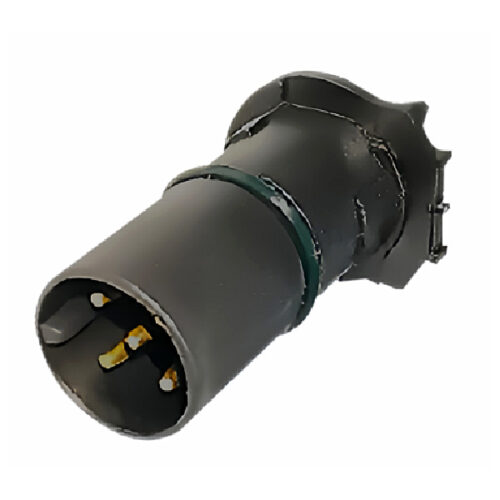
GT Series-Automotive Wiring Pins Connector -5-Pin Socket, 5-Pin Electrical Connectors For Motor Controller
-
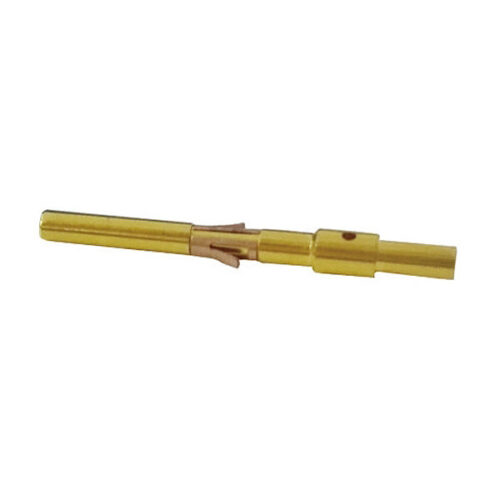
1.0 mm signal pin