Connector manufacturer
Connector manufacturer
How Automotive Multi-Pin Connectors Work?
In the modern automobile, a silent revolution has taken place. Where once a simple mechanical machine growled to life, today’s vehicle is a rolling network of sophisticated electronics. Hundreds of sensors, actuators, control modules, and infotainment systems communicate in a digital symphony to deliver performance, safety, and comfort. The unsung hero enabling this complex conversation is not a microchip or a line of code, but a humble yet profoundly critical component: the automotive multi-pin connector. These unassuming plastic blocks and their metallic hearts form the central nervous system of the vehicle, carrying power, data, and signals to every corner. This article delves into the technical intricacies of how these connectors work, exploring their anatomy, mating principles, electrical performance, and the relentless engineering that ensures reliability in one of the most hostile environments imaginable.
Anatomy of a Multi-Pin Connector: More Than Just Plugs and Sockets
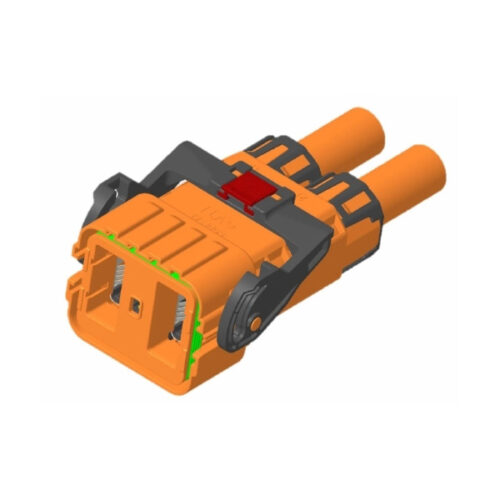
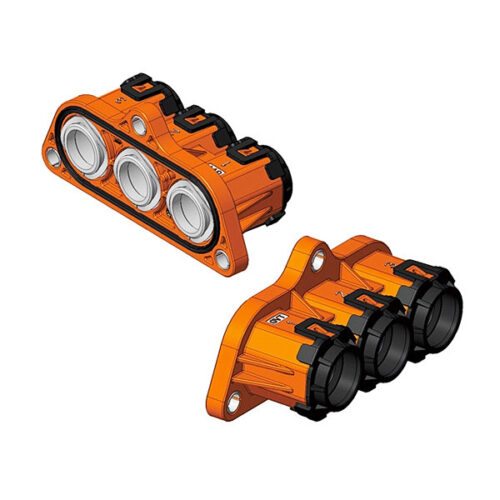
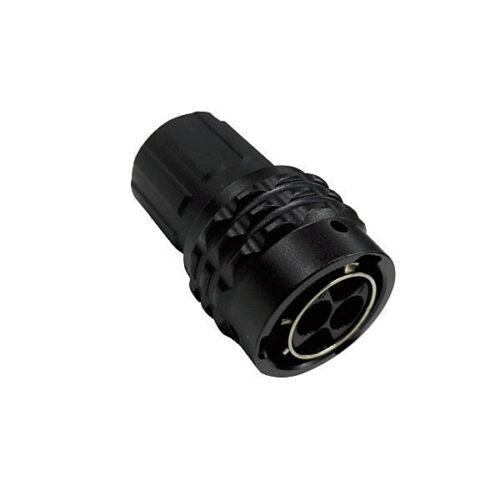
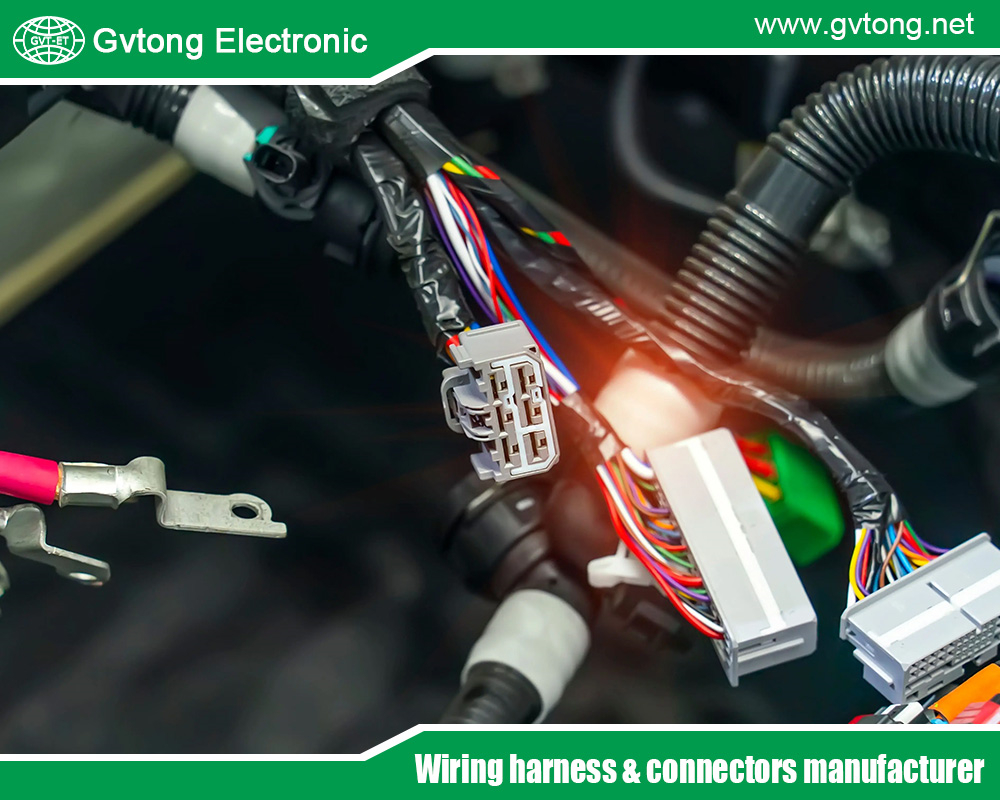
A automotive multi-pin connector is not a single item but a system. Its primary function is to provide a reliable, separable interface for electrical circuits. This separability is key for modular assembly, servicing, and component replacement. A typical sealed automotive connector system consists of several fundamental components:
- Housing: The external plastic shell, usually made from high-temperature thermoplastics like PBT (Polybutylene Terephthalate) or PA (Polyamide/Nylon). It provides structural integrity, protects the internal components, and features keying mechanisms to prevent mis-mating. Housings are often color-coded for circuit identification (e.g., black for ground, blue for infotainment).
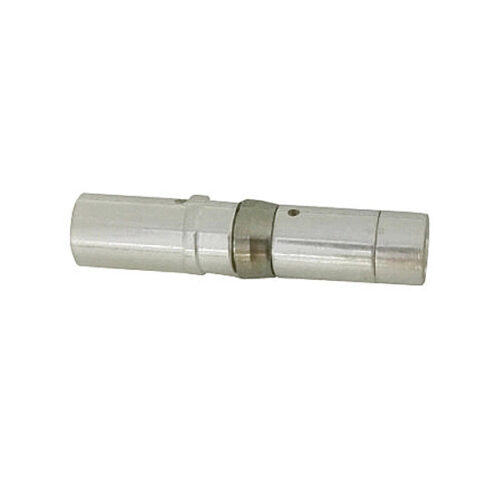
- Terminal (Pin & Socket): The heart of the electrical connection. These are precision-stamped and formed metal components, typically made from copper alloys (brass, phosphor bronze) and plated with layers of tin, silver, or gold for corrosion resistance and stable conductivity. The male terminal (pin) is designed to insert into the female terminal (socket), which uses a spring-like contact beam to exert a specific normal force on the pin, creating the electrical interface.
- Terminal Position Assurance (TPA) Device: A secondary locking mechanism, usually a plastic slider or latch integrated into the housing. It is engaged after the terminals are inserted into the housing. The TPA locks each terminal in place, preventing it from vibrating loose or being pushed out (“backout”) during mating or in service.
- Connector Position Assurance (CPA) Device: Another lock, but for the connector half itself. The CPA is a separate clip or lever that provides an audible and tactile “click” when two connector halves are fully mated, confirming a secure connection. It also prevents accidental uncoupling from vibration.
- Seals and Grommets: Critical for environmental protection. Each wire often has a wire seal—a small rubber grommet that creates a watertight barrier around the individual wire where it enters the housing. Additionally, a header seal or interface seal is placed between the two mating connector halves, sealing the entire connection from external contaminants like water, dust, and road salts.
- Secondary Locking Hinge (SLH) or Lever: On connectors with many pins (high pin count), the mating force required can be substantial. A mechanical lever is used to reduce the mating force by providing a mechanical advantage, gradually drawing the two halves together smoothly and completely without damaging the pins.
The Mating Sequence: A Precision Dance
The connection process is a carefully choreographed sequence ensuring reliability:
- Alignment and Pre-Mating: The connector halves are brought together. Guide pins and funnels on the housing ensure gross alignment before the delicate terminals make contact.
- Primary Lock Engagement: As the housings push together, the CPA mechanism begins to engage, and the housings’ primary locks (flexible latches) start to interlock.
- Terminal Contact Wipe: This is a critical electrical phenomenon. The leading edge of the male pin slides along the contact beam of the female socket as it seats. This wiping action scrubs off thin films of oxide, sulfide, or contamination that may have formed on the metal surfaces, exposing a fresh, conductive metal-to-metal interface.
- Full Seating and CPA Lock: The terminals reach their fully seated position, and the connector housings “click” together as the primary locks snap into place. The CPA device is then engaged (often manually), providing the final, audible confirmation of a secure connection and locking the primary locks.
- Seal Compression: Throughout the mating process, the rubber interface seal is compressed between the two housings, forming a complete environmental barrier.
Electrical Principles: The Science of Reliable Contact
The core electrical function happens at the microscopic interface between the pin and socket.
- Contact Normal Force: The spring design of the female terminal exerts a controlled, consistent force (measured in Newtons) perpendicular to the male pin. This force is crucial—it must be high enough to maintain intimate contact and low electrical resistance, but not so high as to cause excessive wear or require impractically high mating forces.
- Real Area of Contact: Even highly polished metal surfaces are rough at a microscopic level. Actual electrical current flows only through the tiny asperities (microscopic peaks) that are in physical contact. The normal force determines the number and size of these contact spots. Higher force deforms the metal slightly, increasing the “real” contact area and reducing resistance.
- Contact Resistance: The total resistance at the junction (constriction resistance plus film resistance) must be minimal and stable over the connector’s lifetime. The contact wipe and sufficient normal force are designed to minimize this. Unstable contact resistance leads to voltage drops, heat generation, and signal integrity issues.
- Current Carrying Capacity: The terminal’s size, material, and plating are engineered to carry the required current without excessive temperature rise. Power circuits (e.g., to a fan or motor) use larger gauge wires and heavier-duty terminals, while signal circuits (e.g., from a sensor) use smaller, more delicate pins.
The Crucible of Reliability: Defying the Automotive Environment
An automotive connector must perform flawlessly for over 15 years and 150,000+ miles while enduring conditions that would destroy ordinary electronics.
- Vibration and Mechanical Shock: Engines vibrate, and cars drive over potholes. Terminals must not fret (micro-move) under vibration, as this can wear away plating and generate oxide debris, increasing resistance. The TPA and the terminal’s own retention tangs in the housing are vital here.
- Thermal Cycling: Engine bay temperatures can swing from -40°C to +125°C or higher. Connector materials (plastic housing, rubber seals, metal terminals) expand and contract at different rates (differential thermal expansion). The design must accommodate these movements without losing contact force or breaking seals.
- Environmental Sealing (Ingress Protection – IP Rating): Connectors are subjected to high-pressure water jets (car washes), humidity, salt spray, and immersion. The wire seals and interface seal work in concert. The seals are typically made from silicone or other elastomers that remain flexible across the temperature range.
- Chemical Resistance: Connectors are exposed to gasoline, oil, brake fluid, transmission fluid, and windshield washer solvent. Housing and seal materials are selected for compatibility, resisting swelling, cracking, or degradation.
Testing and Validation: Proving Ground for Performance
Before a connector design is approved for production, it undergoes a battery of severe tests defined by standards like USCAR-2, LV214 (German automotive), and ISO 16750. These include:
- Thermal Shock Cycling: Rapidly moving between extreme hot and cold chambers for hundreds of cycles.
- Vibration Testing: Subjecting the mated connector to specific frequency profiles simulating years of road vibration.
- Current Cycling: Repeatedly applying and removing high current to test for resistance stability and overheating.
- Salt Spray Testing: Exposing the connector to a corrosive salt fog atmosphere.
- Seal Tests: High-pressure water spray and immersion testing to verify IP6K9K (high-pressure, high-temperature jet protection) or similar ratings.
- Mating/Unmating Force and Durability: Testing the connector pair for hundreds of mating cycles to ensure forces remain within specification and no physical or electrical degradation occurs.
Evolution and Future Trends: Towards Smart and High-Speed Links
As vehicles evolve, so do their connectors:
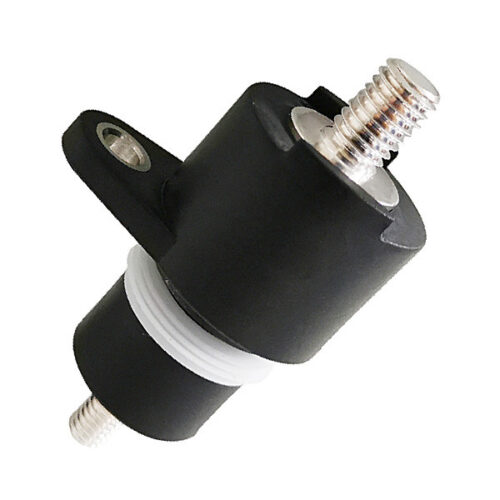
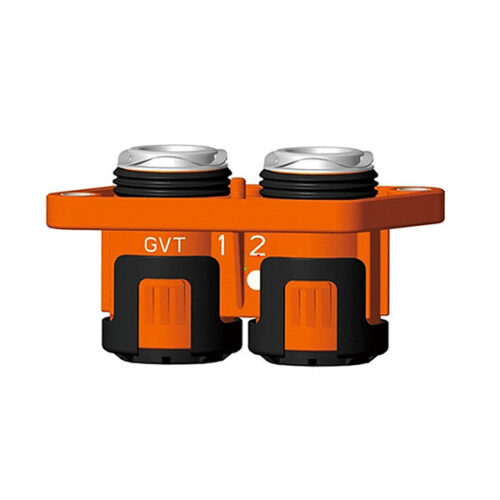
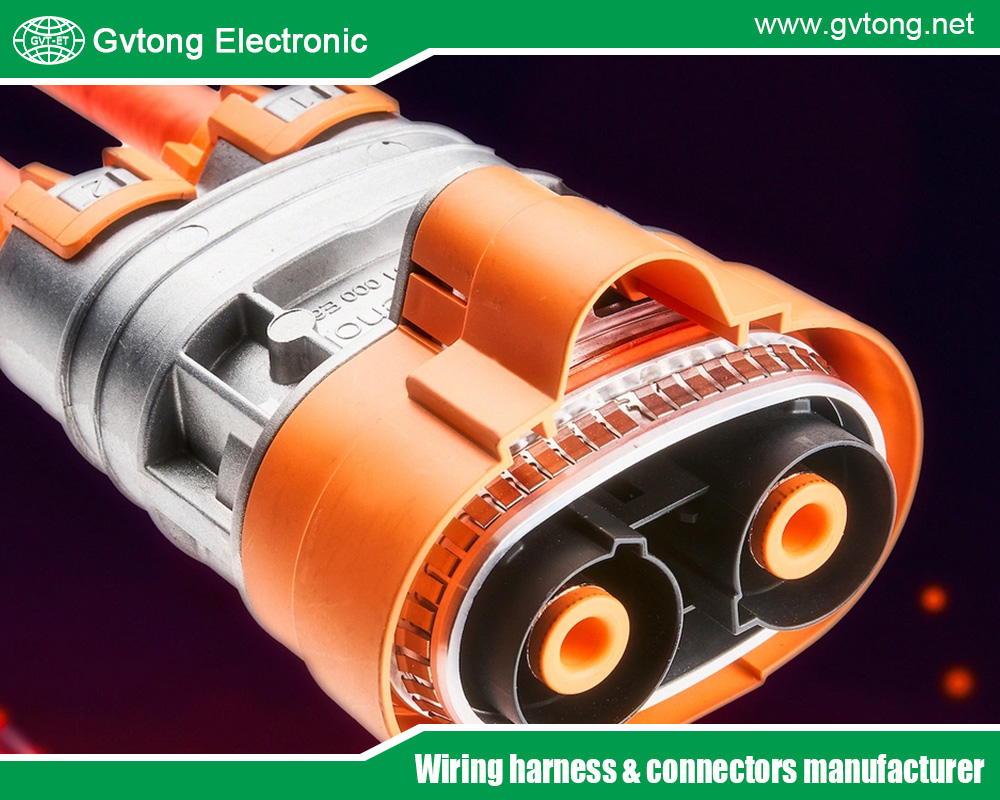
- High-Voltage Connectors: For Electric Vehicles (EVs), connectors must safely handle 400V or 800V systems, with sophisticated “high-voltage interlock loops (HVIL)”—a low-voltage circuit that runs through the connector and must be completed before the high-voltage circuit is energized, ensuring safety during servicing.
- High-Speed Data Connectors: For cameras, radar, lidar, and infotainment (Ethernet, FAKRA, H-MTD), connectors are engineered like miniaturized coaxial cables. They must preserve signal integrity, control impedance, and minimize crosstalk between adjacent pins, requiring specialized geometries and shielding.
- Miniaturization: The push for more features in less space drives smaller pin pitches (the distance between pin centers), demanding even greater precision.
- Material Science: New plastic compounds offer higher temperature resistance and better flow for molding intricate features. New plating technologies improve durability and cost-effectiveness.
Conclusion
The automotive multi-pin connector is a masterpiece of precision engineering, materials science, and rigorous validation. It transforms the abstract flow of electricity and data into a robust, separable, and reliable physical link. From ensuring your engine starts on a frozen morning to enabling the split-second decision of an automatic emergency braking system, these components work silently in the background. They are the indispensable linchpins, the physical layer of the vehicle’s network, without which the advanced electronics of the modern automobile would be nothing more than a collection of isolated, useless boxes. As we advance into the era of autonomous, connected, and electric vehicles, the humble connector will continue to evolve, bearing ever greater responsibility as the faithful carrier of the vehicle’s vital signs and commands.
For more about how automotive multi-pin connectors work, you can pay a visit to Gvtong at https://www.gvtong.net/ for more info.